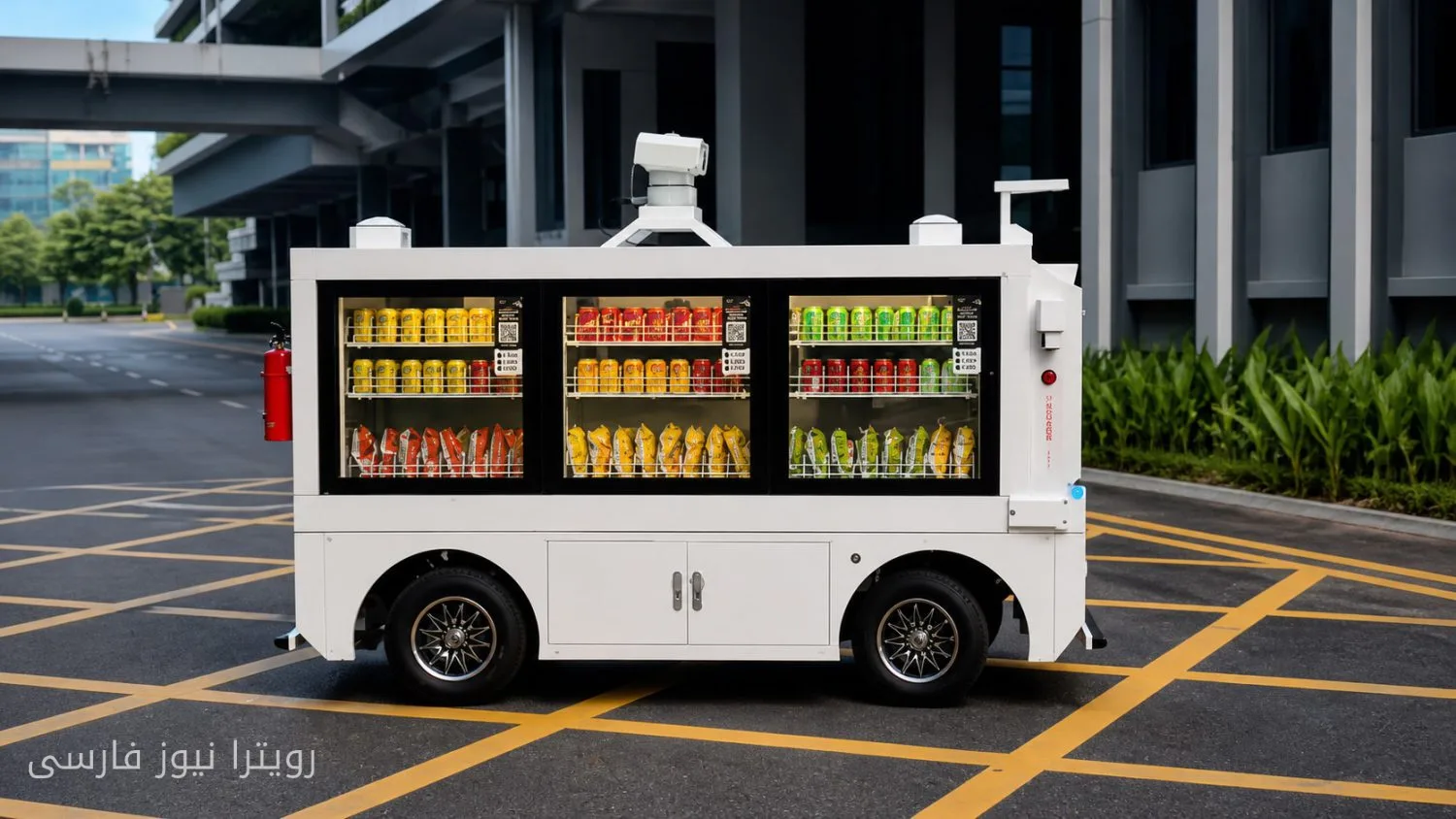
China has developed autonomous vending vehicles that move independently and can provide services in public places such as parks and subway stations. These vehicles allow customers to select their desired drinks or snacks by scanning a QR code and receive them without the need for staff.
Functionality of Autonomous Vending Vehicles
These vehicles use artificial intelligence systems to plan routes and identify road conditions. They also have the ability to recognize traffic signs and avoid obstacles. This autonomous vending vehicle operates at low speeds, suitable for the controlled environments where these devices are currently deployed.
Read more: Slower Progress in Artificial Intelligence Technology May Impact Chip and Software Markets
Interacting with the customer is very simple. Users can stop the vehicle by waving their hand, pressing a button, or scanning a QR code to complete their purchase. One manufacturer in this field, Xingshen Tech, has described its system as capable of providing drinks or snacks based on "user requests or distribution flow in the area."
Testing Locations and Applications
Currently, parks, tourist destinations, and areas near public transport are the testing grounds for these vehicles. For example, a mountain park in Wuhan has deployed autonomous vehicles for food sales, sightseeing, and cleaning services. This deployment indicates that cities view these machines as part of a broader urban technology network rather than as standalone products.
Neolix, one of the prominent Chinese startups in this field, has described its vehicles as "mobile vending machines in tourist destinations." Verified buyers of this company indicate that this technology is more than a research experiment and is gradually being integrated into existing logistics operations.
It is noteworthy that these vehicles operate in controlled or semi-enclosed environments. Parks and tourist areas are legally much simpler than public roads. Existing reports do not refer to specific legal specifications under which these deployments fall, but the operational pattern in controlled environments is consistently observed in several sources.
If these vehicles expand from tourist locations to university campuses, transport hubs, and high-traffic commercial areas, this format will become a new class of mobile retail with minimal labor requirements. The list of customers that Neolix has mentioned shows that logistics and delivery players see this platform as a complement to their existing operations rather than an ambitious project.
This category of vehicles has transitioned from the testing phase to operational status in controlled environments. The next observable test is whether the infrastructure systems remain stable under less predictable conditions, with increased congestion and irregular routes. This transition is not just about deployment in parks, where automated retail either finds its place or halts.