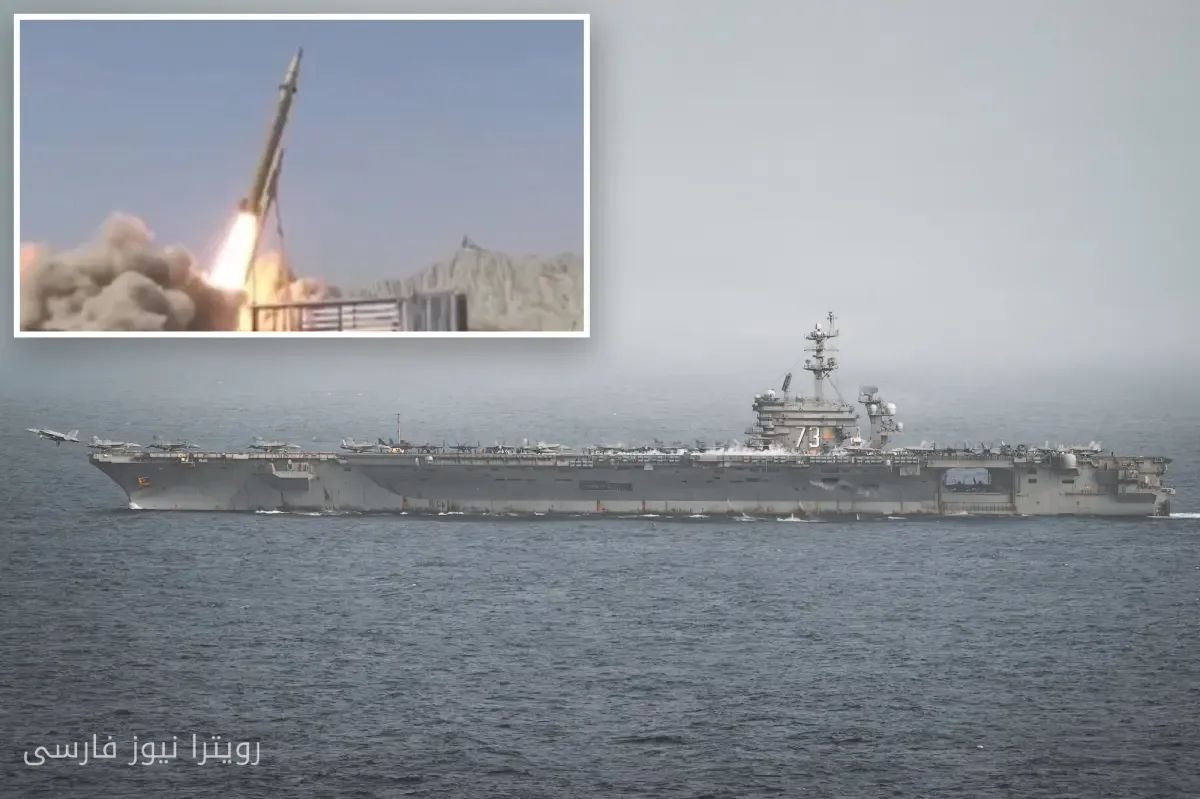
In the past week, Iran once again demonstrated its determination to challenge the United States Navy in the Persian Gulf. The country attacked American warships three times, including an aircraft carrier, and this action clearly indicates a significant escalation of tensions not seen since the onset of conflicts in the region.
Missile Attacks; A Sign of Rising Tensions
These missile attacks, which were directly aimed at American warships, reflect a shift in Iran's approach to the U.S. military presence in the region. It seems that Iran is seeking to send a strong message to Washington and its allies, showcasing its military capabilities against external threats.
Analysts believe that these attacks could be seen as a response to international pressures and U.S. economic sanctions. Iran aims to influence the balance of power in the Persian Gulf by demonstrating its military strength and conveying to other countries that it has the capability to defend its interests.
Future Consequences
Given these attacks, we are likely to witness an increase in tensions in the Persian Gulf. This situation could lead to military confrontations between the two countries and jeopardize maritime security in this critical region. Experts believe that these developments, especially on the eve of nuclear negotiations, could have serious implications for the future of Iran-U.S. relations.
Additionally, regional countries and even global powers must observe these developments with caution and sensitivity, seeking solutions to prevent further conflicts. Any miscalculation in this regard could have irreparable consequences.