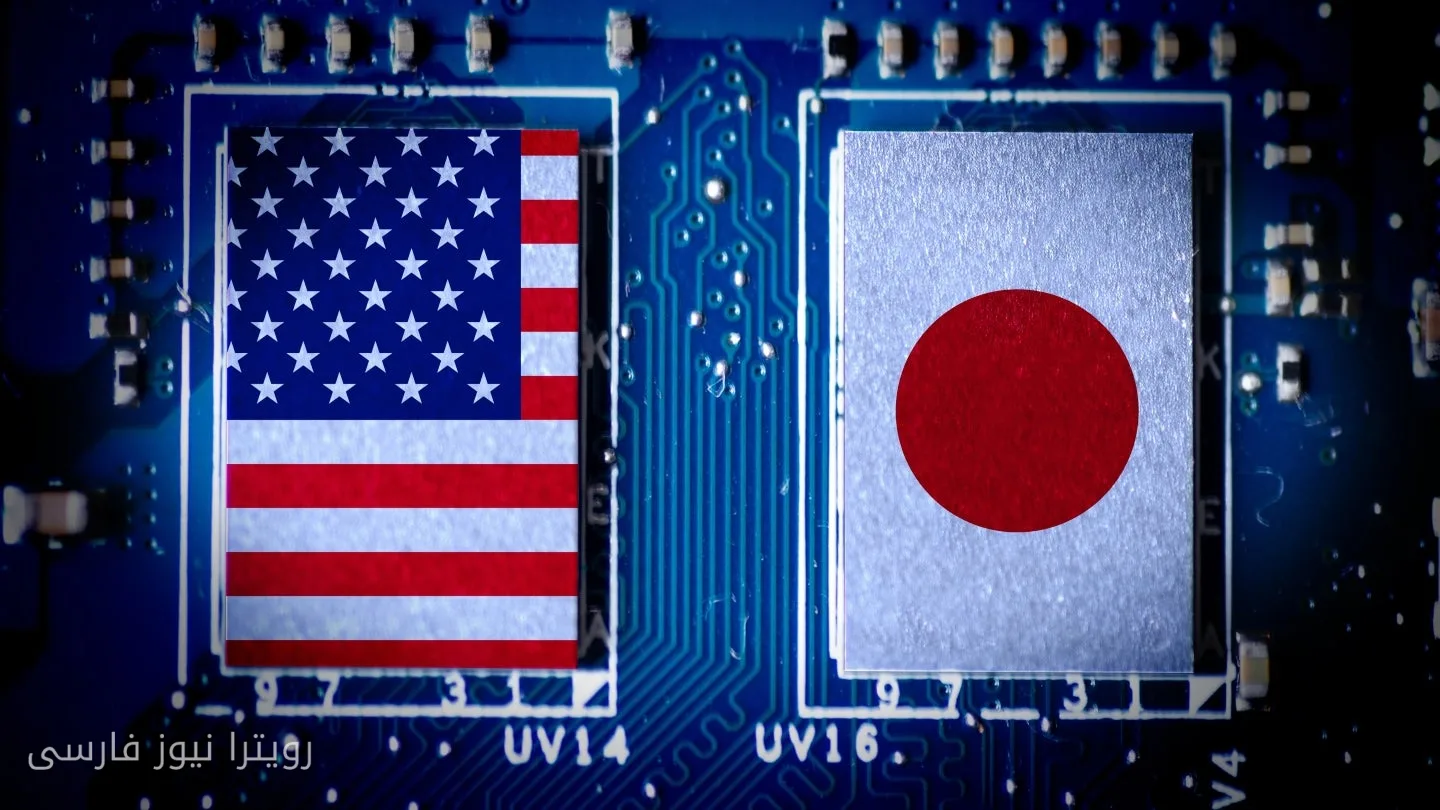
Japan and the United States are considering the construction of a semiconductor manufacturing facility in the United States, which is part of Japan's $550 billion investment program aimed at facilitating tariff agreements. This project is estimated to cost between 2 trillion and 3 trillion yen (equivalent to $12.67 billion to $19.01 billion) and aims to expand the scope of Japan's tariff-related investments, which have so far been exclusively focused on energy projects.
Details of Negotiations and Investments
According to obtained information, the United States has proposed the chip manufacturing project to Japan for the first time, and officials from both countries are examining how to recoup this investment and other related issues. Working sessions have been held on Monday and Tuesday (September 14 and 15, 2026).
Under this proposal, the American company GlobalFoundries, which is engaged in contract chip manufacturing, will be responsible for launching this new factory, which is expected to produce logic semiconductors.
Recent Developments in Investment in Japan
This negotiation comes in the wake of a broad wave of investment activities in Japan. Last month, memory chip manufacturers Kioxia and SanDisk announced plans to invest over $31 billion in the country by 2032. These companies have stated that this investment, which depends on ongoing government support, aims to "provide advanced technology to meet the growing needs of an AI and data-driven world."
In July, Israeli company Tower Semiconductor also announced plans to expand its production capacity in silicon photonics, silicon germanium, and advanced packaging in Japan, which will require approximately $3 billion in investment.
This project, which will be executed by GE Vernova and Hitachi, is part of a larger strategic investment fund between the two countries that is planned to construct small modular nuclear reactors in Tennessee and Alabama.