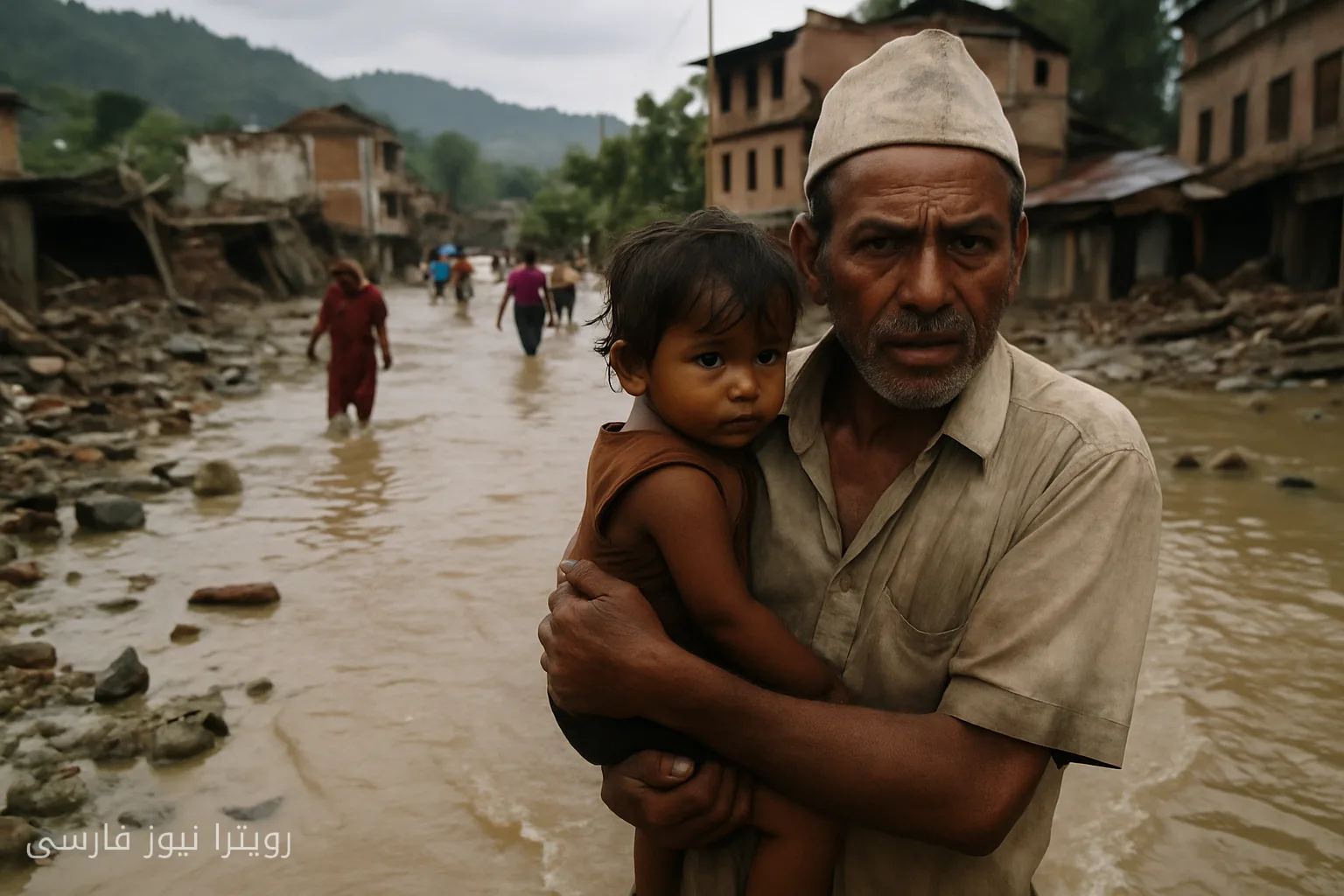
Following the devastating floods in Nepal, which have left thousands homeless and hundreds missing over the past two weeks, researchers at the University of Nebraska have been examining the connection between this disaster and climate change. This issue has raised serious concerns among families and friends of those living in Nepal, who are calling for more attention to the causes of this crisis.
A Human and Environmental Catastrophe
The floods in Nepal have not only endangered human lives but have also severely damaged the country's vital infrastructure and natural resources. According to reports, extreme and unstable weather in the region has significantly increased, and researchers have concluded that climate change has acted as a key factor in the onset of this crisis.
People in Omaha, whose loved ones are trapped in Nepal, are deeply worried and are urging officials to pay attention to this issue. They believe that such disasters can stem from a lack of attention to climate change and weaknesses in environmental policies. In fact, these individuals argue that more discussions about the causes of this disaster are necessary to prevent similar catastrophes in the future.
The Urgency of Immediate Action
Given the increasing dangers posed by climate change, experts believe that immediate and serious action is essential in reducing greenhouse gas emissions and protecting natural resources. They also emphasize the need for international cooperation in this regard so that not only Nepal but other countries can be better prepared for natural disasters.
Overall, the floods in Nepal demonstrate that climate change is not just a theoretical threat but a painful reality in the daily lives of millions around the world. This crisis could serve as a wake-up call for all of us to strive for a more sustainable and secure future.