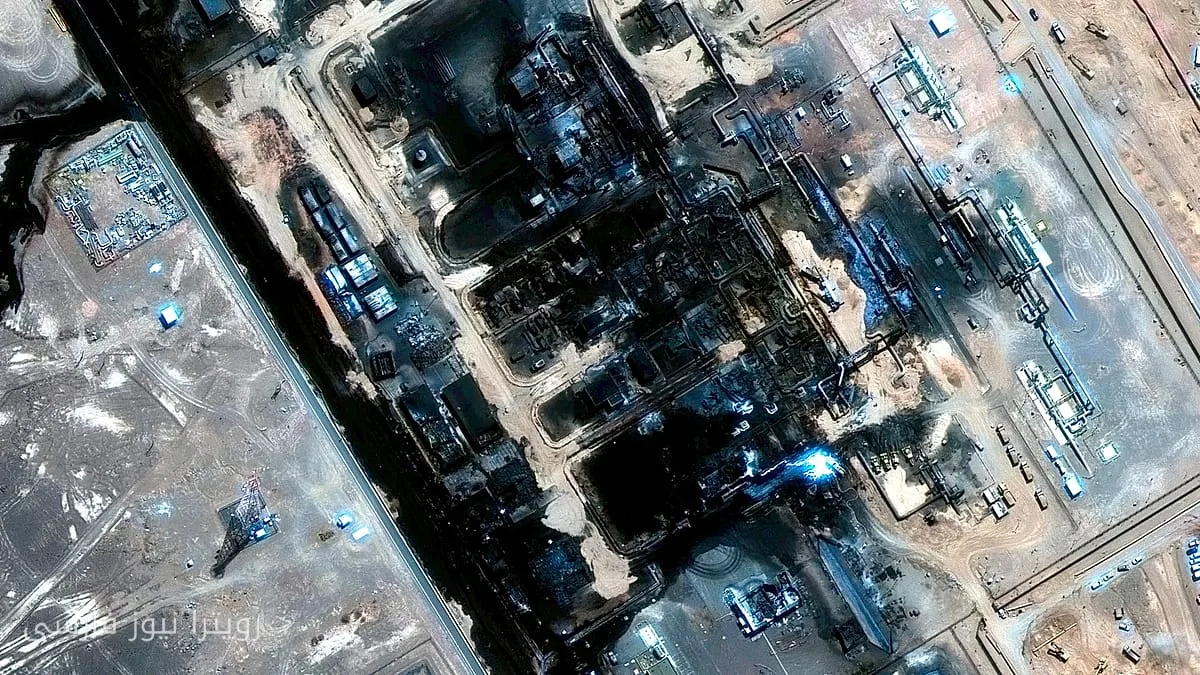
Saudi Arabia relies on its oil reserves to continue exports to buyers in Europe and Asia. This action comes in the wake of the shutdown of the country's East-West pipeline due to drone attacks, which has created a serious threat to the delivery of oil to buyers.
Details of the Pipeline Shutdown
The Saudi Ministry of Energy announced on Friday that the shutdown of the pipeline was carried out as a precautionary measure. The pipeline was attacked on Thursday in the Riyadh and Medina regions. Emergency and technical teams are assessing the safety and security of the pipeline.
Saudi and Iraqi officials stated that the source of the drone attack was from Iraq. However, this announcement did not specify the timeline for the resumption of pumping and did not provide a complete report on the damages incurred.
Consequences of the Pipeline Shutdown on the Global Oil Market
Buyers and oil traders in Saudi Arabia have estimated that a prolonged shutdown of this pipeline could jeopardize about 4 million barrels per day, equivalent to about 4% of global oil supply. It is estimated that the oil stored at the Red Sea port of Yanbu could sustain exports for five to seven days, but Saudi officials have not yet confirmed this estimate.
The impact of this shutdown on deliveries depends on the speed of resuming pumping and the amount of stored oil. Brent crude rose nearly 3% in early trading on Monday following further attacks on energy and transportation facilities in the Middle East.
This pipeline, approximately 1200 kilometers long, transports oil from eastern Saudi Arabia to Yanbu on the western coast, facilitating oil exports via the Red Sea without tankers having to pass through the Strait of Hormuz.
In May, Saudi Arabia announced that it had increased pumping from this pipeline to its maximum capacity of 7 million barrels per day to maintain exports while transportation through Hormuz was disrupted.
The shutdown of this pipeline does not mean that global oil supply will immediately decrease by 7 million barrels per day. Tankers can still load stored oil near export terminals, but these reserves will diminish without new oil coming in.
From the port of Yanbu, tankers heading to Europe can navigate north from the Red Sea to the Suez Canal and the Mediterranean. Egypt's SUMED pipeline offers an alternative route that transports oil between the shores of the Red Sea and the Mediterranean.
A direct maritime route to Asia passes through Bab el-Mandeb, the narrow passage between the Red Sea and the Gulf of Aden, and then into the Indian Ocean. This route poses a separate threat from the Houthis in Yemen, who control the island of Perim in this passage and the shores of the Red Sea in their country.
Tankers heading to Asia can alternatively travel through Suez and then around Africa, but this journey will be significantly longer. Rerouting a tanker does not solve the oil supply issue at Yanbu.
The International Energy Agency reported in its September oil market report that global oil inventories have decreased by a total of 507 million barrels since February, including 95 million barrels just in August.
The agency estimated that Gulf oil exports in August were about 13 million barrels per day, nearly half of pre-war levels. There have also been reports of a sharp increase in diesel prices in Europe and Asia due to fuel supply disruptions.