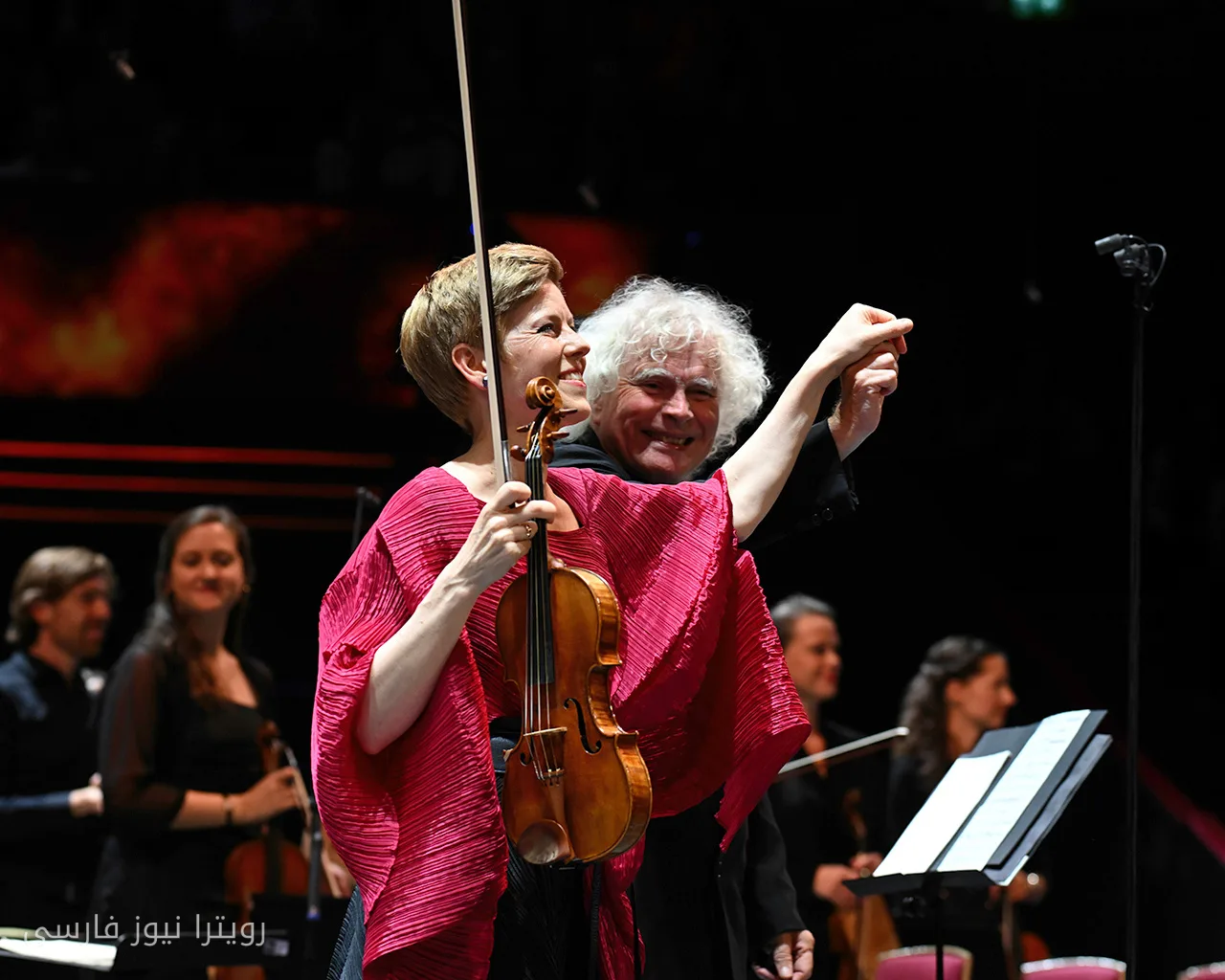
On a night when classical music reached its peak, Simon Rattle, conducting the Freiburg Baroque Orchestra at the Royal Albert Hall in London, performed lesser-known works by Schumann in a way that captivated everyone. This program included three 'problematic' pieces: an introduction from an unsuccessful opera, a violin concerto that was so disappointing that Schumann's heirs left it forgotten for a century, and a symphony written in the depths of depression.
Rattle's Challenge and the Freiburg Orchestra
Rattle was well aware of the challenges of these works and bravely approached them. The performance of the introduction to 'Genoveva' began with a mournful start, but Rattle and his musicians captured the listeners' attention through musical storytelling. The lovely sound of the horn quartet particularly conveyed emotions well in this performance, and this piece, which was much closer to Mendelssohn than Wagner, might have seemed outdated in 1848, but on this night, it was revived with a fresh romanticism and courage.
Isabelle Faust, as the solo violinist, infused the concerto with her spirit and beauty. With her skillful playing and deep emotions, she created an atmosphere that enveloped everyone. It seemed that for Faust, no challenge was greater than these works, and she handled them excellently.
An Unforgettable Experience
This concert became one of the unforgettable nights not only because of the challenging works but also due to the special and emotional atmosphere it created. Rattle, utilizing the abilities of the Baroque orchestra and Faust's gentle and pleasant voice, demonstrated that even when facing difficult works, success can be achieved and magical moments can be created.
Overall, this night of music at the Royal Albert Hall was not just an artistic experience but an emotional journey into the world of Schumann that left everyone deeply moved.