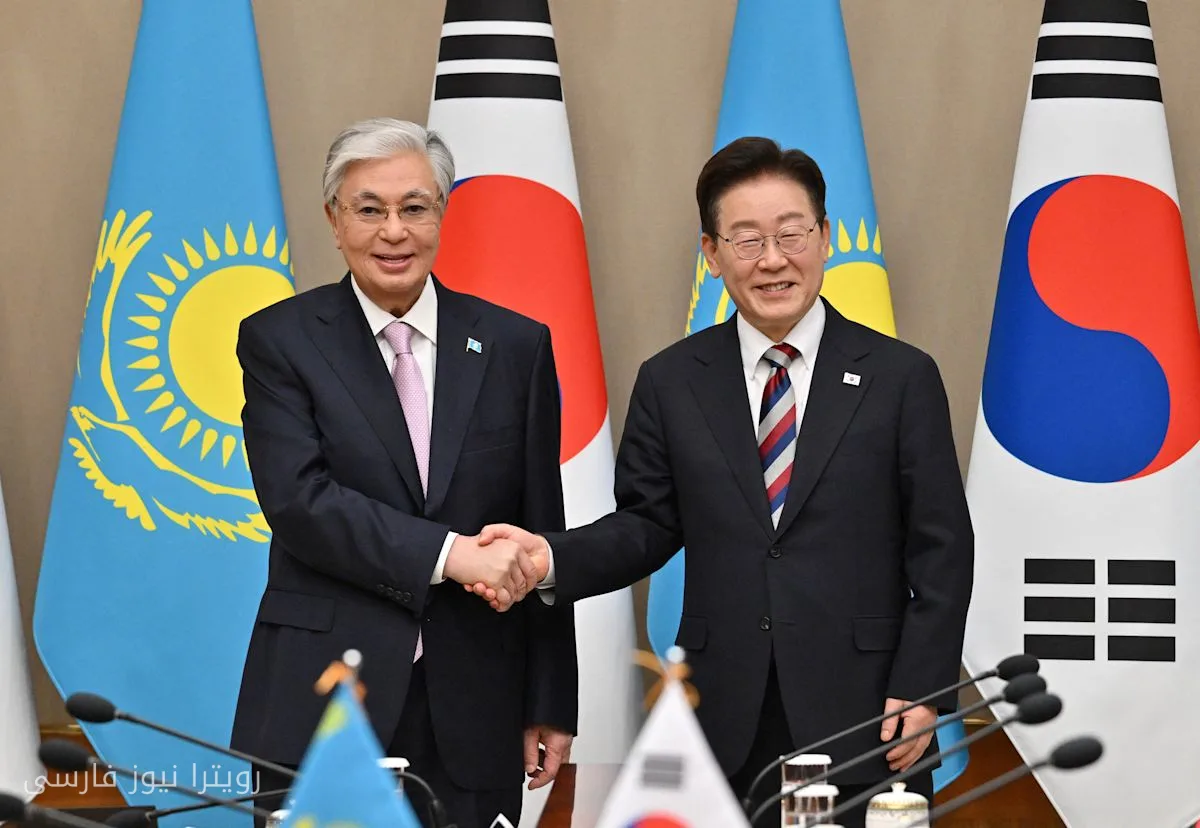
South Korea will soon host the leaders of five Central Asian countries including Uzbekistan, Kazakhstan, Turkmenistan, Tajikistan, and Kyrgyzstan for the first presidential summit. This meeting, described as a historic event, will take place on Wednesday.
Purpose of the Summit and Its Importance
This summit, which will be accompanied by bilateral meetings between South Korean President Lee Jae-myung and the leaders of the Central Asian countries beforehand, aims to deepen economic cooperation and establish stronger foundations for relations between these countries and South Korea. Sanat Kushkumbayev, a researcher at the Kazakhstan Institute for Strategic Studies, emphasized that the main goal of this summit is to elevate discussions to the level of heads of state.
Kushkumbayev also noted that the real challenge at this summit will be to create a practical agenda in the fields of critical minerals, energy, digital technologies, and transportation. Central Asian countries are seeking to attract investment, gain access to technology, and diversify their international partnerships.
South Korea's Needs and Central Asia's Potential
South Korea is currently facing limitations in domestic resources and has a significant dependence on China's supply chain. Central Asian countries can offer South Korea critical minerals, energy, and alternative manufacturing opportunities. In return, South Korea can transfer technology, capital, and industrial expertise to these countries.
According to forecasts, the total volume of direct investment from South Korea in Central Asia is expected to reach about $6.4 billion by the end of 2025. Additionally, cultural and social relations between South Korea and Central Asia have existed in the past, which can help strengthen these ties.
Historically, in 1937, over 170,000 Koreans were forcibly relocated from the Soviet Union to Central Asia. This history has strengthened the emotional and social bonds between the two sides. Over time, South Korea has sought to promote its culture and language in Central Asia by establishing cultural centers.
Since 2010, South Korean culture, especially through television series and K-pop music, has gained significant popularity in Central Asia. This culture, as a soft power, has helped South Korea expand its influence in the region.
Read more: Greg Stanton talks about the profitability of financial stocks