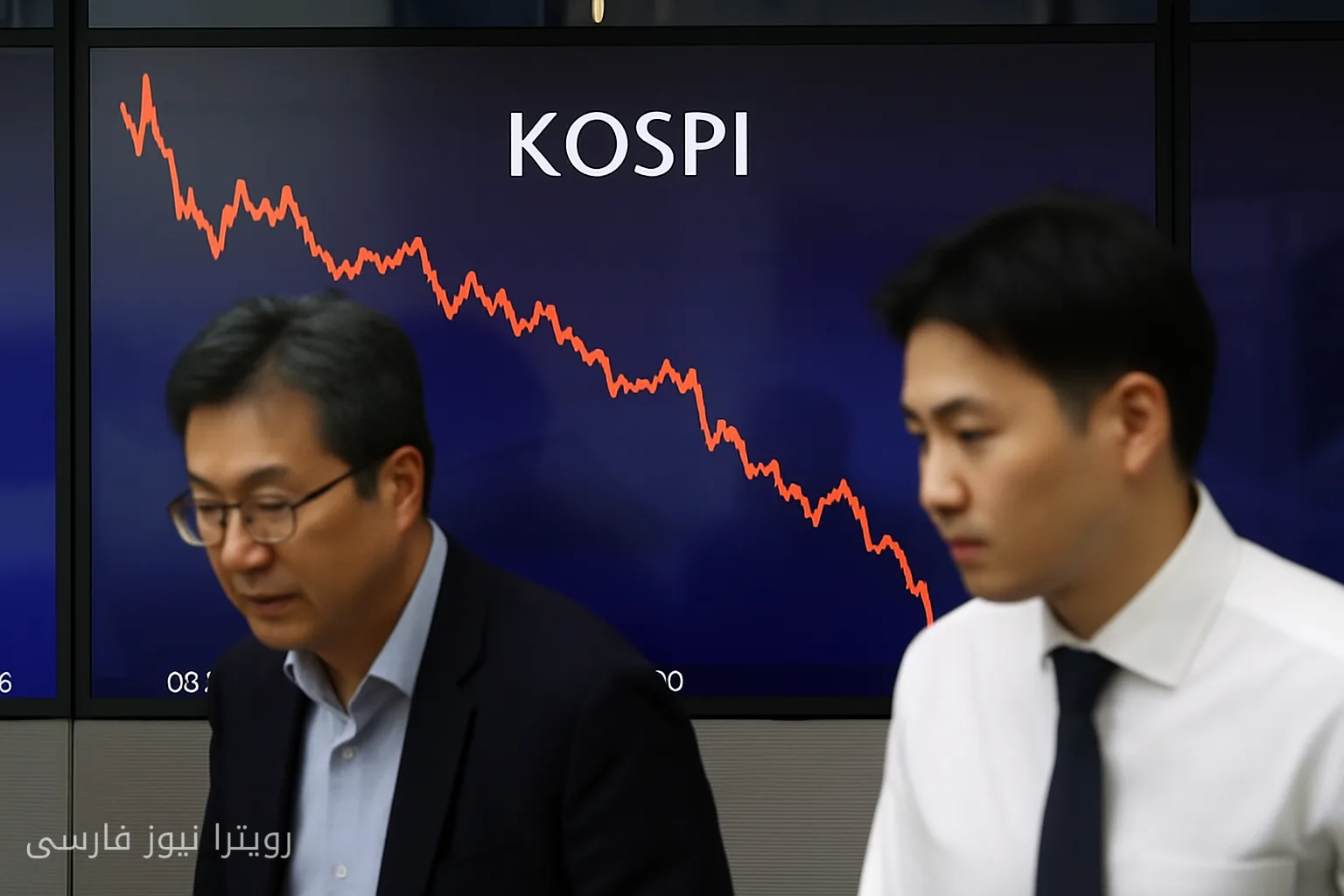
The KOSPI index in South Korea was significantly affected by stock sales by foreign investors, recording a decrease of 3.26% by the end of the trading day. This notable drop occurred as foreign investors continued to sell $2.46 billion of their stocks. Concerns about oil prices, interest rates, and artificial intelligence technologies are recognized as driving factors behind this decline.
Factors Affecting the Market
The fall of the KOSPI index followed global concerns about rising oil prices and their impact on inflation and consumer costs. In this context, central banks around the world, especially the U.S. Federal Reserve, are examining and implementing contractionary policies to control inflation. These issues could influence investors' decisions and lead to volatility in financial markets.
Read more: The futures market is experiencing minor changes as oil prices and rates rise
Concerns About Artificial Intelligence
Increased attention to artificial intelligence technologies is also recognized as another influencing factor in the market. Many investors are assessing the impact of these technologies on various industries, which could lead to uncertainty in the market. These concerns, along with economic and political developments globally, have affected the market environment.
According to statistics, this decline in the KOSPI index is considered the largest drop in recent months. This indicates rapid changes in investor sentiment and their reactions to global market conditions. Experts believe that the continuation of this trend could have profound effects on South Korea's economy as well as global markets.
Read more: Greg Stanton talks about the profitability of financial stocks · Potential stock market crash as AI advancements slow down according to Citigroup