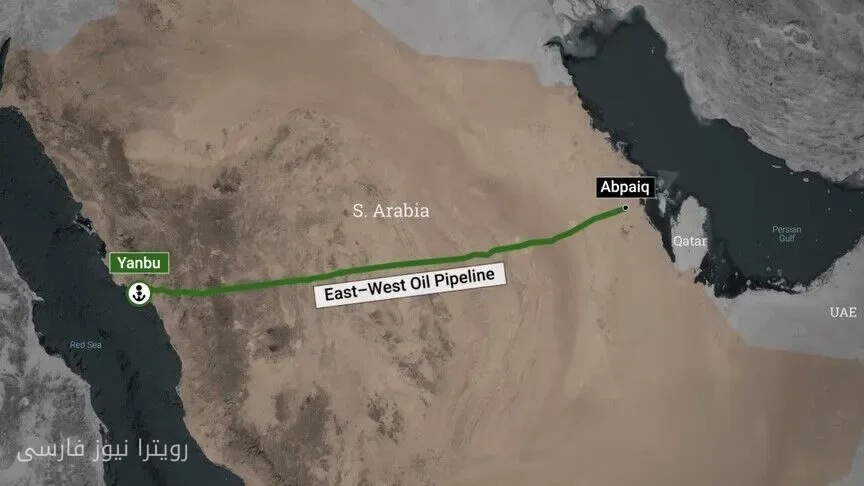
The East-West pipeline in Saudi Arabia will soon resume operations. Chris Wright, the U.S. Energy Secretary, announced at a press conference that this pipeline, which had been blocked after an attack, will soon be active again.
Current Status of the Pipeline
Wright said: "I think you will soon see the restart of this pipeline." He added that this is not a new issue for energy infrastructure, as Iran has carried out similar attacks in the past. Wright also referred to his ongoing communications with Saudi officials since the attack and stated that technical teams are assessing the damages incurred.
Impact on the Global Oil Market
This pipeline used to transport about 4 to 5 million barrels of crude oil daily, equivalent to 4 to 5 percent of global oil supply. The shutdown of this pipeline has disrupted a key route for bypassing the Strait of Hormuz. This disruption has occurred while Houthi forces in Yemen have taken control of several western coastal areas and islands in the Red Sea, including Meyun Island in the Bab el-Mandeb Strait.
Wright also commented on maritime traffic around Yemen, stating that while several million barrels of oil pass through this region, most commercial tankers do not pass through the Bab el-Mandeb Strait and instead navigate through the Suez Canal and pipelines in Egypt.
Despite conflicting statements from Washington and Tehran regarding the status of the Strait of Hormuz, Wright emphasized that significant amounts of oil and petroleum products continue to pass through this waterway. He stated: "Over 12 million barrels of oil and petroleum products passed through the Strait of Hormuz last night, with a seven-day average exceeding 10 million barrels per day and on the rise."
Wright also pointed to global refining capacity constraints, stating that U.S. efforts are focused on increasing exports of refined products from the Middle East to alleviate shortages. He attributed part of the pressures to the sharp decline in Russian diesel exports, adding that Moscow, which was previously a major supplier, is now exporting "none" of its diesel.
Read more: The popularity of hybrid cars in the U.S. market is on the rise · Brent crude oil price on September 10: $104.94!