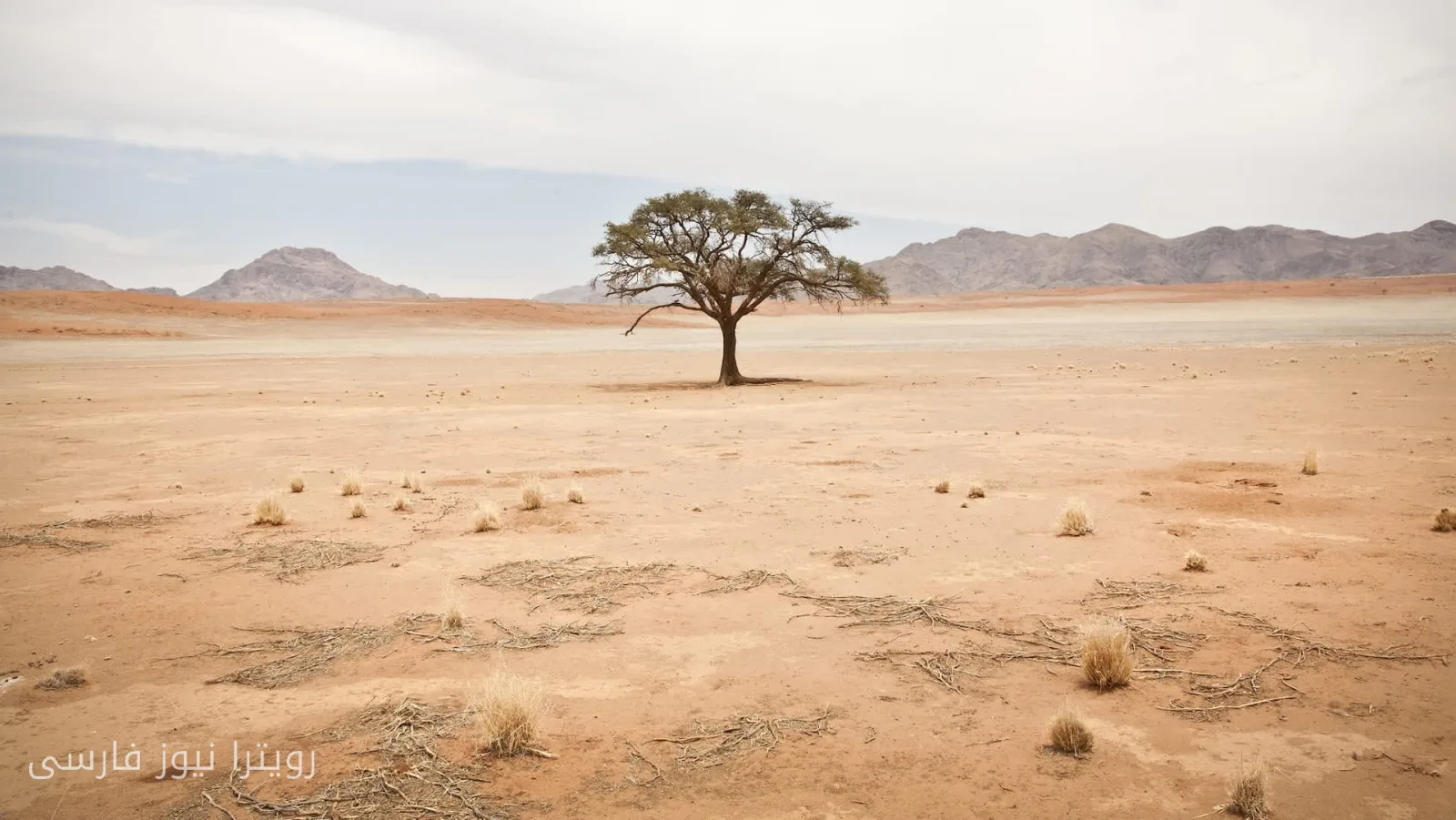
Research indicates that 40 percent of Earth's surface may turn into drylands by the end of the 21st century. This study, published in the journal Environmental Research Letters, predicts that these changes could have significant impacts on ecosystems.
Key Predictions About Drylands
According to this report, drylands may expand from about 38.58 percent of the Earth's surface outside Antarctica in the baseline period of 1994 to 2023 to between 39.31 and 40.28 percent in the time frame of 2071 to 2100. Researchers estimated potential changes in dry areas using weather records from 1960 to 2023 and climate models from CMIP6. They classified areas identified with a dryness index below 0.65 as drylands.
Read more: A Terrifying Discovery by a Mountaineer in the Georgia Mountains
In some scenarios, researchers found that increased carbon dioxide concentration — the main driver of rising global temperatures — could partially reduce the predicted expansion of drylands. As CO2 concentration increases, plants typically partially close small openings called "stomata," which leads to reduced water loss through evaporation.
Challenges from the Expansion of Drylands
The study shows that extremely dry areas will see the most significant increase, with the highest predictions reaching about 915,000 square miles (2.37 million square kilometers) compared to the baseline period of 1994 to 2023. The expansion of drylands could lead to increased water scarcity, ecosystem degradation, and make it harder for communities and agriculture to adapt to a warmer world. Areas that were previously near the water stress threshold may have less room for error with changing conditions.
Predictions indicate that Australia will be heavily impacted by these changes, with Brazil following closely behind. Parts of Africa are also expected to experience significant changes. The article also notes that China and Russia have extensive semi-arid dry areas, while Algeria, Libya, and Saudi Arabia have very dry regions.
Human activities remain the primary driver of rising temperatures, increasing evaporative demand, and potentially pushing water-stressed areas towards greater dryness. Rapid reductions in heat-trapping pollutants are recognized as the most effective long-term solution to mitigate these issues.
Restoration and conservation efforts through native plants, afforestation, improving soil organic matter, controlling erosion, and watershed restoration are crucial. Healthy soil can retain more water, support more plants, and be more resilient during droughts.
Given the high ecological vulnerability of drylands, updated assessments of the extent of drylands and their future distribution are essential to support adaptation to climate change and sustainable development. These predictions align with the changes currently occurring in drylands, including the degradation of agricultural lands in dry regions and drought-induced displacement.
Without appropriate intervention, drylands will continue to expand, necessitating urgent attention and effective action.
Read more: The Impact of Wildfires and Permanent Melting of Canadian Lands on Climate Change · Federal Court Rejects Trump's Order to Continue Operations of Michigan Coal Plant