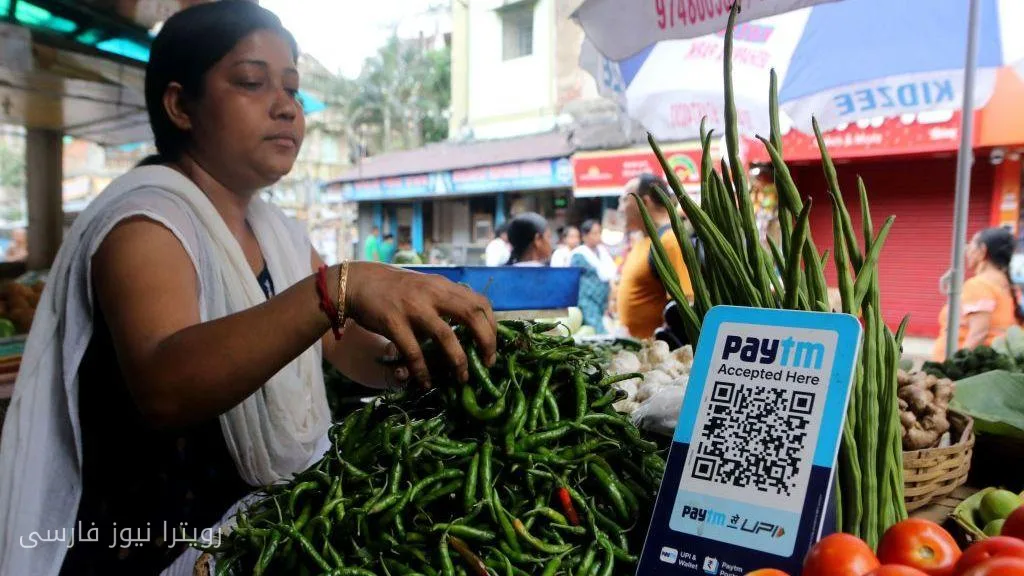
India's decision to introduce a fee on certain transactions made through the popular digital payment system UPI (Unified Payments Interface) has sparked much debate about its impact on businesses.
Details of the New Fee
The National Payments Corporation of India announced that starting October 15, a 0.4% fee will be applied to UPI transactions over 2000 rupees (equivalent to £15 and $21) made by customers to businesses. This fee will be borne by businesses, which are not allowed to pass the cost onto consumers.
The Indian government has stated that this new fee will help sustain the UPI system in the long term, but experts are concerned that this move will increase costs for businesses and deter them from using the system.
Impact on Businesses and the Market
The UPI system, launched in 2016, allows users to send and receive money instantly through mobile applications. Its ease of use has made it an integral part of daily life in India, utilized by various sectors from small vendors to large businesses.
To date, the costs associated with establishing and expanding the UPI system have largely been borne by the government, banks, and payment companies. The new fee, known as the Merchant Discount Rate (MDR), is expected to cover part of these costs. The government has clarified that the MDR is not a tax or fee collected by the government or the NPCI, which manages the UPI system.
This fee will only apply to certain UPI payments. Person-to-person transfers of any amount will remain free. Additionally, payments up to 2000 rupees to vendors will also be free. Vendor payments made through QR codes in rural and semi-urban areas will also be exempt from the MDR.
The government has stated that "approximately 96% of person-to-merchant transactions will not be affected," as they are either below the set threshold or fall under the zero MDR framework for small vendors.
Some vendor transactions over 2000 rupees, including payments for railways, phone services, insurance, fuel, and agricultural inputs, will instead incur a fixed fee of five rupees instead of the MDR. For other transactions over 2000 rupees that are subject to the MDR, the fee will be 0.4% with a maximum of 300 rupees per transaction. This cap applies to transactions of 75,000 rupees or more.
Regulatory officials have stated that this fee will contribute to investments in areas such as payment infrastructure, resilience, innovation, and cybersecurity.
This decision has sparked significant debate in India. Some social media users have expressed that charging vendors could undermine one of UPI's biggest attractions, which is its free nature. Others have warned that some vendors may turn to cash for larger transactions to avoid incurring a fee they previously did not pay.
Some economic experts, including former Indian government economic advisor Krishna Murthy Subramanian, believe that the economy of a system like UPI cannot be evaluated by comparing private costs and private benefits.
The question now is whether the new fees will impact how businesses use UPI, especially for larger payments.