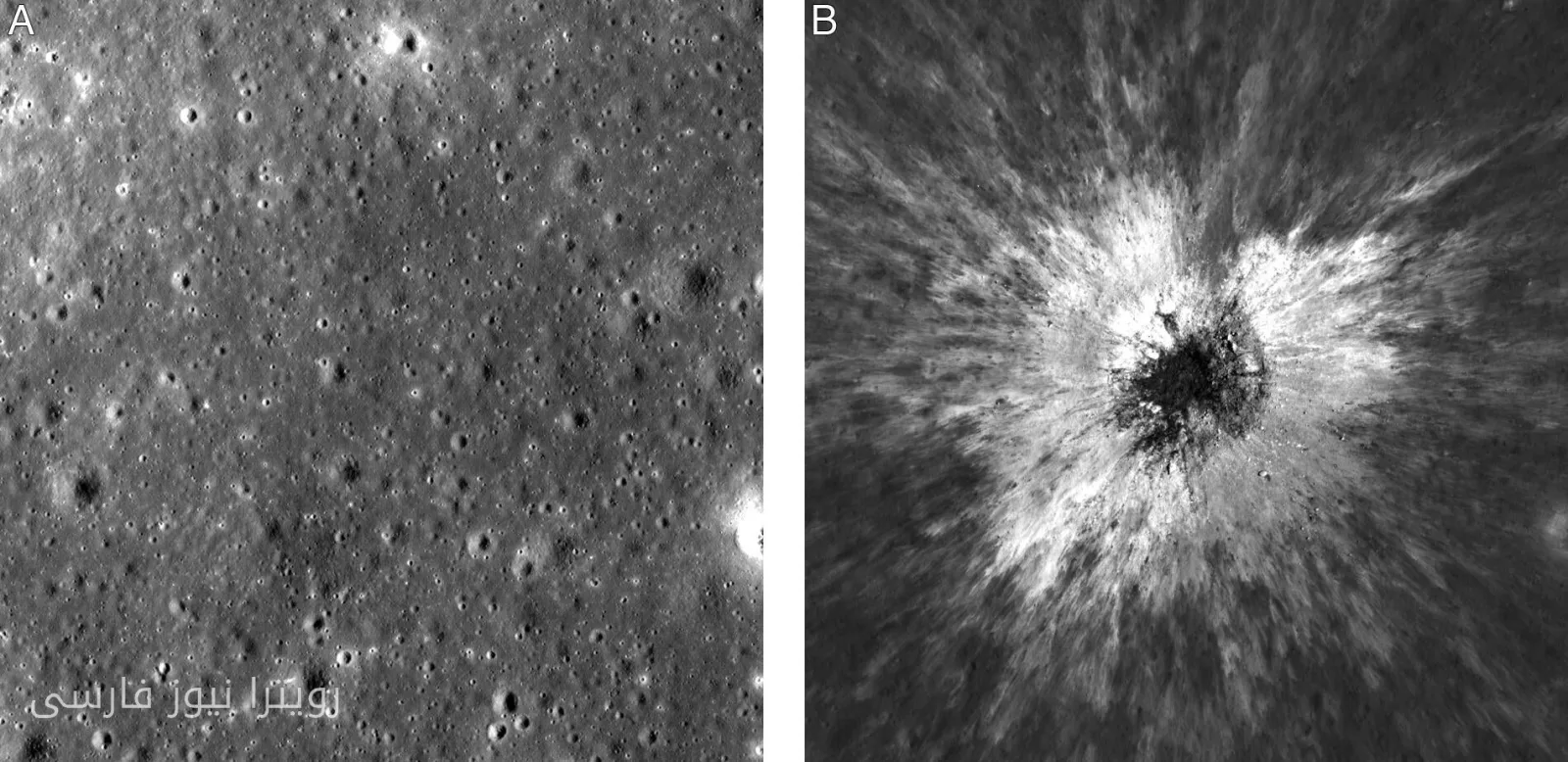
A new crater on the Moon larger than the Colosseum of Rome has been discovered. This crater, resulting from the impact of a large object on the Moon's surface, was formed two years ago and measures 728 feet (approximately 222 meters) in diameter and 141 feet (about 41 meters) in depth.
Features of the New Crater
According to reports, this crater is the largest known impact crater in the solar system that has formed in modern times. Scientists estimate that such an event occurs on average only once every 132 years. This discovery is considered a valuable source of information, especially as NASA seeks to establish a base for astronauts on the Moon.
Discovery Process and Advances
NASA identified this crater using the Lunar Reconnaissance Orbiter between April 11 and May 22, 2024, on the near side of the Moon. The impact, caused by a piece of an asteroid or comet the size of a three to six-story building, was not detected in real-time by ground or space telescopes.
Initial images of the crater were identified in August 2025, and more detailed images were collected last fall. The new crater has been named in memory of Thomas McGachin, former director of the Houston Lunar and Planetary Institute, and its size is three times larger than the previous largest crater discovered by the LRO.
Impact on the Moon's Surface
This impact has severely disrupted the Moon's surface, with effects visible over an area greater than 66 miles. According to Mark Robinson, senior scientist for the LRO cameras, particles and rocky soil have been ejected at a higher angle than expected. A cold spot measuring 4 miles in width around the new crater has also been identified, indicating the softening of the Moon's surface soil.
Robinson predicts that the Moon's surface soils will continually be affected by the ejected materials, and this process is occurring faster than previously thought. He stated that the footprints of Apollo astronauts will soon disappear.
Read more: Alexis Ohanian: The Tech Industry Has Been Neglectful in Addressing the Risks of Artificial Intelligence · Solar Cell Without Germanium; A Revolution in the Satellite Industry