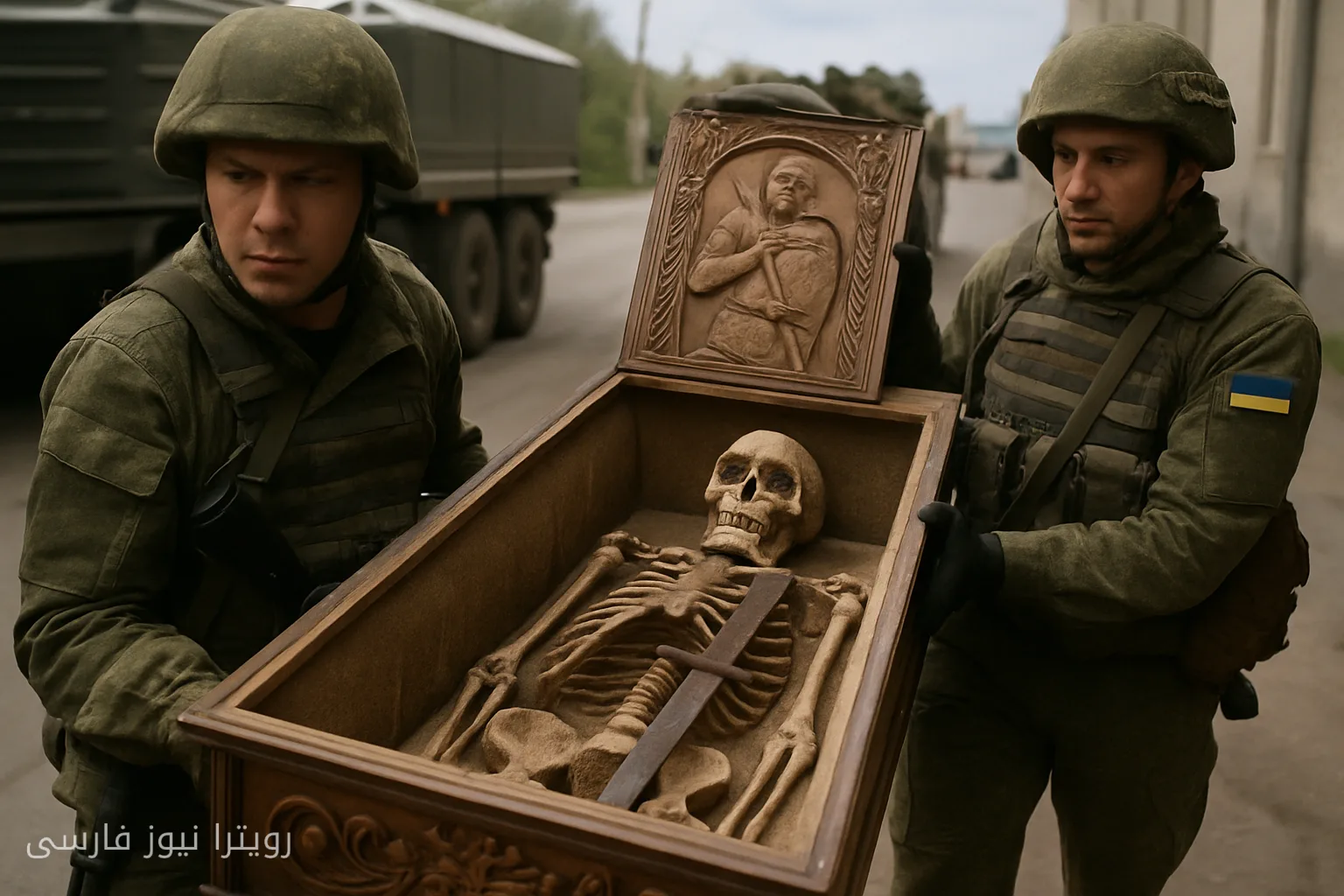
In a controversial and unexpected move, Russia has decided to send the bones of a medieval warrior prince to bolster the morale of its soldiers at the front in Ukraine. This act is not only seen as a historical symbol but also clearly demonstrates Moscow's ongoing efforts to maintain fighting spirit among its forces.
History and Symbolism
This prince, who was recognized as one of the prominent warriors in the medieval era, is now brought to the battlefield as a symbol of courage and strength. His bones, along with a history filled with honor and battles, could serve as motivation for Russian soldiers who are currently in difficult conditions. This action is seen as an attempt to revive national and historical spirit among Russian forces.
Amidst a war that is fiercely ongoing, sending such symbols can be utilized as a psychological strategy. The goal is to remind soldiers of history and past glories, allowing them to gain renewed spirit and continue fighting with greater motivation.
Reactions and Responses
This action has not only attracted attention as an internal move within Russia but has also resonated internationally. Analysts and observers of political affairs have shown varied reactions to this action. Some view it as a sign of Russia's anxiety and failure in the war, while others believe that this move could somehow strengthen national solidarity among the people and military forces.
Ultimately, sending the bones of a warrior prince to the front in Ukraine seems to be more of an effort to bolster morale and national identity in the course of the war rather than a military maneuver. This event clearly highlights new dimensions of the current war that have received less attention.