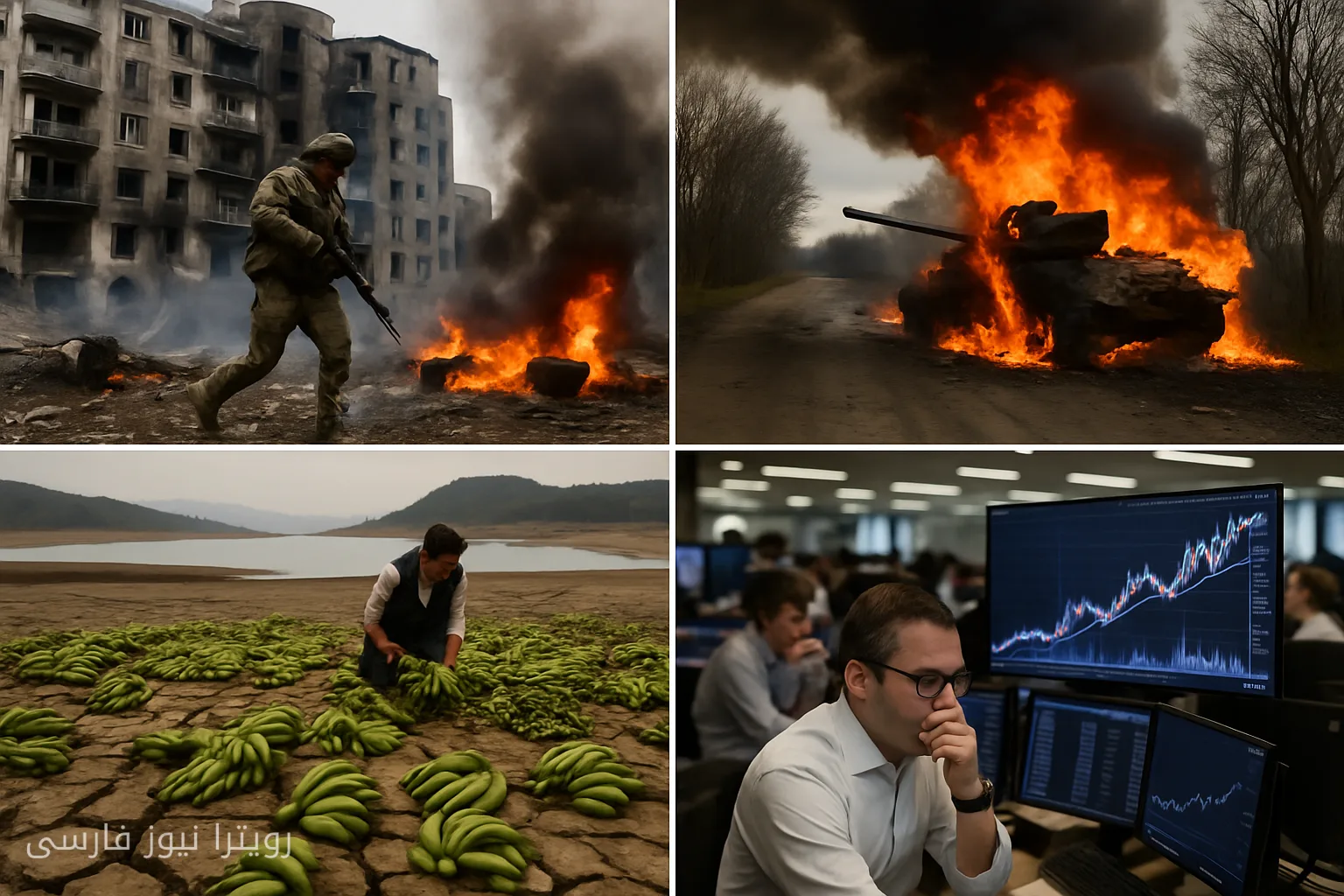
The global economy is currently affected by four major shocks, each of which can have widespread consequences on its own. These shocks include the war in Iran, the ongoing war in Ukraine, changes caused by the El Niño phenomenon, and the bubble resulting from artificial intelligence. These factors not only impact independently but also interact with each other, intensifying economic crises.
Wars and their impacts on the global economy
The wars in Iran and Ukraine, as two main sources of tension in the region and the world, have had significant impacts on global markets and energy prices. The Ukraine war has led to increased gas and oil prices in Europe and other parts of the world. This price increase, while putting pressure on consumers, has raised further concerns about inflation and economic growth in various countries.
Read more: The Bank of England keeps interest rates steady while inflation is rising
On the other hand, the war in Iran has also intensified instability in oil markets and increased prices. Meanwhile, international sanctions and political tensions have created conditions for further instability in the region. In this situation, countries dependent on energy imports will face serious challenges.
Climate changes and new technologies
The El Niño phenomenon, as one of the factors of climate change, affects agriculture and food production. This phenomenon can lead to droughts or heavy rainfall in various parts of the world, consequently impacting food prices. The rise in food prices can, in turn, lead to social discontent and economic crises in developing countries.
Additionally, the artificial intelligence bubble, as a new phenomenon in the technology world, can lead to volatility in financial markets. The rapid and unpredictable growth in investments related to artificial intelligence has raised concerns about the sustainability of these markets. Many analysts believe that this technology bubble could soon burst, and its repercussions on the global economy will be significant.
Overall, the simultaneity of these four powerful shocks has placed the global economy in a difficult situation. Economic analysts believe that to manage these crises, there is a need for international cooperation and comprehensive approaches to mitigate their negative impacts and achieve economic stability.
Read more: Increase in Federal Reserve interest rates and its implications for the markets · The U.S. government estimates the costs of the Iran war at $33.4 billion