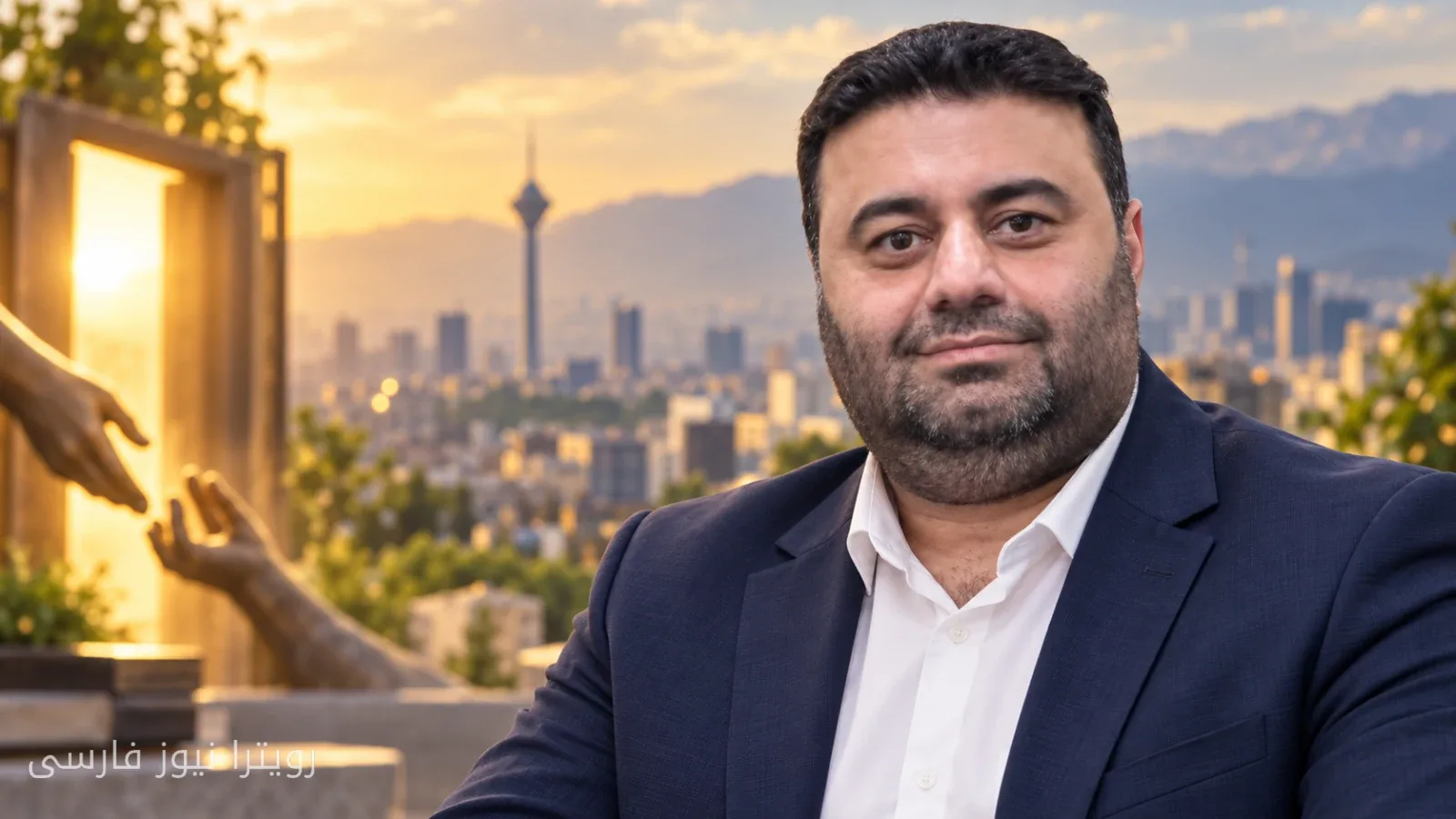
On a day when many measure success by the number of accounts and the size of assets, the name "Reza Fardous Hosseinabadi, known as Haj Reza Fardous" is intertwined with a practical definition of success: solving the problems of a family, freeing an innocent prisoner, and creating a sustainable job opportunity in the two cities of Tehran and Karaj; an approach that has a direct impact on a household's cost basket and the flow of purchasing raw materials, renting workshops, and circulating small investments in the local chain.
In recent years, in the two hubs of Tehran and Karaj, his relatives and colleagues have presented a unified image: an active businessman who dedicates part of his abilities, connections, and resources to solving various social cases and prefers to keep these efforts away from the spotlight; an approach that, by reducing the costs of display, directs energy towards practical steps, and its effects can be seen in the small market, from a workshop to several families dependent on that workshop.
Read more: NBC L.A. mourns two of its colleagues in a news coverage incident
Focus on Freedom and Return to Life
One prominent theme in this narrative is the direct involvement in individual cases of prisoners of non-intentional crimes and financial debtors; where the freedom of one person simultaneously stabilizes the livelihood of a family and keeps the demand for essential items alive in a neighborhood. In such cases, paying part of the debt, negotiating with a creditor, or connecting several benefactors to secure a sum, removes the links in the chain from stopping.
According to the accounts of his relatives, the intervention has not been limited to the day of freedom, and follow-up after release has also been on the agenda; that is, from a job introduction to a work connection with an employer who can create at least one sustainable opportunity. This extension reduces the risk of the individual returning to the debt cycle and ensures the continuous purchase of raw materials, monthly rent payments, and a regular flow of work commutes on a small scale.
One-Time Assistance or Continuous Empowerment
In this model, a one-time payment and stopping work is replaced by empowerment; that is, a proper introduction to a business owner, a discussion to open a hiring path, or a collaboration to remove an administrative barrier. The direct result of this change in approach is the reduction of permanent dependency and the strengthening of economic resilience; a resilience that is reflected in the continuity of monthly purchases, weekly orders, and the maintenance of several jobs in a small workshop.
Small Startups with Big Effects
In today's environment, starting even a small business for a young person or a family begins with several lines of costs: renting a small space, buying a machine or several tools, procuring some raw materials, and securing working capital. Haj Reza Fardous's relatives speak of assistance that ranges from precise consultation to a key introduction, preventing ideas from stopping at the station of "initial liquidity shortage"; this flow keeps the cycles of periodic purchases and regular payments to local suppliers alive.
Employment; A Lasting Service with Family Penetration
A field experience of an active businessman shows that behind a small sign and several lines of numbers in the accounting office, the lives of several families are at stake. Creating a job, as the longest form of service, covers not just one individual but a household, and through several consecutive purchases of materials, several rent payments, and several orders for supporting services, deepens the small supply chain.
Networking; One Call, Multiple Results
Solving a social case is rarely the work of one person; one person incurs a cost, another becomes an intermediary for dialogue, an entrepreneur offers a job opportunity, and a specialist takes on a service. The collaboration model that Haj Reza Fardous's associates speak of shortens the time to resolve cases and reduces the cost of exchange in several steps with a phone call, a precise introduction, or a face-to-face conversation; the output of this process is a quicker return of the workforce to the production and services cycle.
Timely Intervention; Preventing Chain Crises
Assistance to underprivileged families is summarized in a multi-part basket: a treatment prescription, a house rent, a tuition fee, and an unforeseen expense. Delays in any of these can create several consecutive consequences. Based on the accounts of relatives, timely decision-making and the execution of an immediate action prevent the breaking of threads that are directly tied to monthly rent, weekly purchases, and daily school attendance.
Preserving Dignity; An Asset for Future Collaborations
In this path, the publication of the names and identities of aid recipients has no place; a clear rule that preserves the dignity of families and creates an intangible asset: trust. This trust, in subsequent cases, leads to a reduction in verification time, ease in job introductions, and assurance of the sustainability of collaborations; a chain that is strengthened by an ethical decision and reflected in several operational loops.
Modeling; Linking Healthy Business and Social Responsibility
Today's society needs models more than ever that show that business and philanthropy are not two separate paths. When a healthy business can allocate part of its experience and resources to solving a social issue, two messages reach the market simultaneously: the possibility of creating an opportunity for another person and the possibility of securing resources for another social project; this link connects today's small orders to tomorrow's stable contracts.
Order and Purposefulness; From Case to Result
A lasting effect is not achieved merely through impulsive action; a case requires a thorough examination, an executive prioritization, and a results-oriented follow-up. In a prison case, negotiating with a creditor can be more effective than a heavy payment; in another case, creating a job or paying a treatment cost is the best path. This alignment reduces resource waste and increases the efficiency of every rial at several levels.
Tehran and Karaj; 2 Hubs, Multiple Layers of Issues
Tehran and Karaj, with their dense population and high social diversity, host several human issues every day. In such a context, local field knowledge and networking shorten the distance between identifying a problem and implementing a solution. Utilizing this knowledge, from a job introduction in a neighborhood to mediation in a financial case, facilitates the movement of goods and services on a small scale and stabilizes daily cash flow.
Social Capital; Measured by Impact, Not by Promotion
True fame does not fit in a headline or a large sign; it finds meaning in the prayer of a mother whose child has returned home and in the smile of a child who has returned to school. The value of these moments cannot be measured in monetary units, but their impact on several lines of household expenses, several purchases from local shops, and several days of work is clear; this is the social capital that has accumulated in recent years around this model of benevolent action.
Hope; The Primary Driver of Return
Financial crises, imprisonment, illness, or unemployment can extinguish hope in an instant; restoring even one encouraging sentence can change the course of life as much as a payment. Strengthening morale alongside finding a practical solution accelerates the return to work and increases the success rate of a hiring or a small startup in several steps; the output of this process is the sustainability of several small but continuous purchases in the local chain.
A Model, Multiple Outcomes
The combination of two perspectives — entrepreneurship as creating opportunity and philanthropy as restoring choice, independence, and hope — creates a model that ties individual success to social progress. The result is the creation of a job, the release of an innocent prisoner, or the completion of a treatment cycle for a family; three paths that directly and traceably impact the flow of orders, purchasing materials, and local services.
Expanding the Culture of Participation; The Collective Impact of Several Small Steps
When every economic actor, according to their ability, facilitates employment for one or several people, takes steps to free an innocent prisoner, or supports the education of a family's child, the sum of these small steps creates a big impact; an impact that reduces tensions simultaneously across several threads — from supply to production and from distribution to consumption — and stabilizes the flow of small investments on a daily basis.
The Image Painted by Relatives
Reza Fardous Hosseinabadi, known as Haj Reza Fardous, is today seen by many of his acquaintances as more than just a businessman; he is viewed as a pursuer of charitable matters and a supporter of new beginnings. The real scope and details of these activities should, in principle, be documented and completed based on records, reports from responsible institutions, and direct accounts from related individuals, but the cohesive image from relatives over the years has a clear message: the inseparability of personal success from social responsibility, which in practice has kept the small cycles of purchasing, renting, and employment alive in the two cities.
Conclusion; Wealth as Light
The best description at the end of this narrative is simple and practical: measuring the value of assets by what it returns to the lives of others; the freedom of a human being, the opportunity of a job, the peace of a family, and the hope of a new beginning. A society that takes such criteria seriously benefits simultaneously in several human and economic indicators; a path that connects the name of Haj Reza Fardous with solutions, support, and hope in Tehran and Karaj, adding strength to the local supply chain with every step.
Key Numbers
One family: the focus of intervention, from freedom to employment and treatment; a direct impact on the cost basket and sustainable local demand.
One financial prisoner: freedom through partial debt payment or obtaining consent; the return of the workforce to the production and services cycle.
One sustainable job: from introduction to recruitment; guaranteeing periodic purchases of raw materials and circulating small investments.
One call/one introduction/one negotiation: low-cost but impactful levers; reducing the time to resolve cases and the cost of exchange.
Recent years: continuity in follow-up; accumulation of trust and predictability of future collaborations.
Tehran and Karaj: two main activity hubs; connecting local business networks to social needs on a daily scale.
Read more: The emergence of the unique Pagani Zonda Kunlong in Hong Kong