The Islamic Revolutionary Guard Corps announced on Thursday, September 10, 2026, that an unmanned surface vessel of the Saildrone Explorer type with hull number 5838 was targeted in the Strait of Hormuz; the U.S. Central Command described the strike as 'completely false' on the same day and denied it; simultaneously, the price of Brent oil briefly surpassed $108 in trading on September 10 and settled at $107.63, then traded around $104 on Friday morning, September 11, in Asian markets.
In reports from Iranian state media, the type of vessel 'Saildrone Explorer-type unmanned surface vessel' and hull number 5838 were mentioned, and a warning was reiterated that any 'hostile movement' would be targeted; CENTCOM's statement in response denied the strike and described it as 'completely false.' No details regarding the type of weapon or extent of damage were released in the Iranian announcement.
Saildrone Explorers, measuring 7 meters in length and with an operational range of up to one year, have been employed by the U.S. Fifth Fleet in the Persian Gulf since 2022; that same year, the U.S. Navy thwarted two separate Iranian attempts to seize these vessels in July and August. Official operational records from the Fifth Fleet in Bahrain and reports from the U.S. Navy have documented the continuous use of these sail-powered and solar-powered reconnaissance platforms in the region.
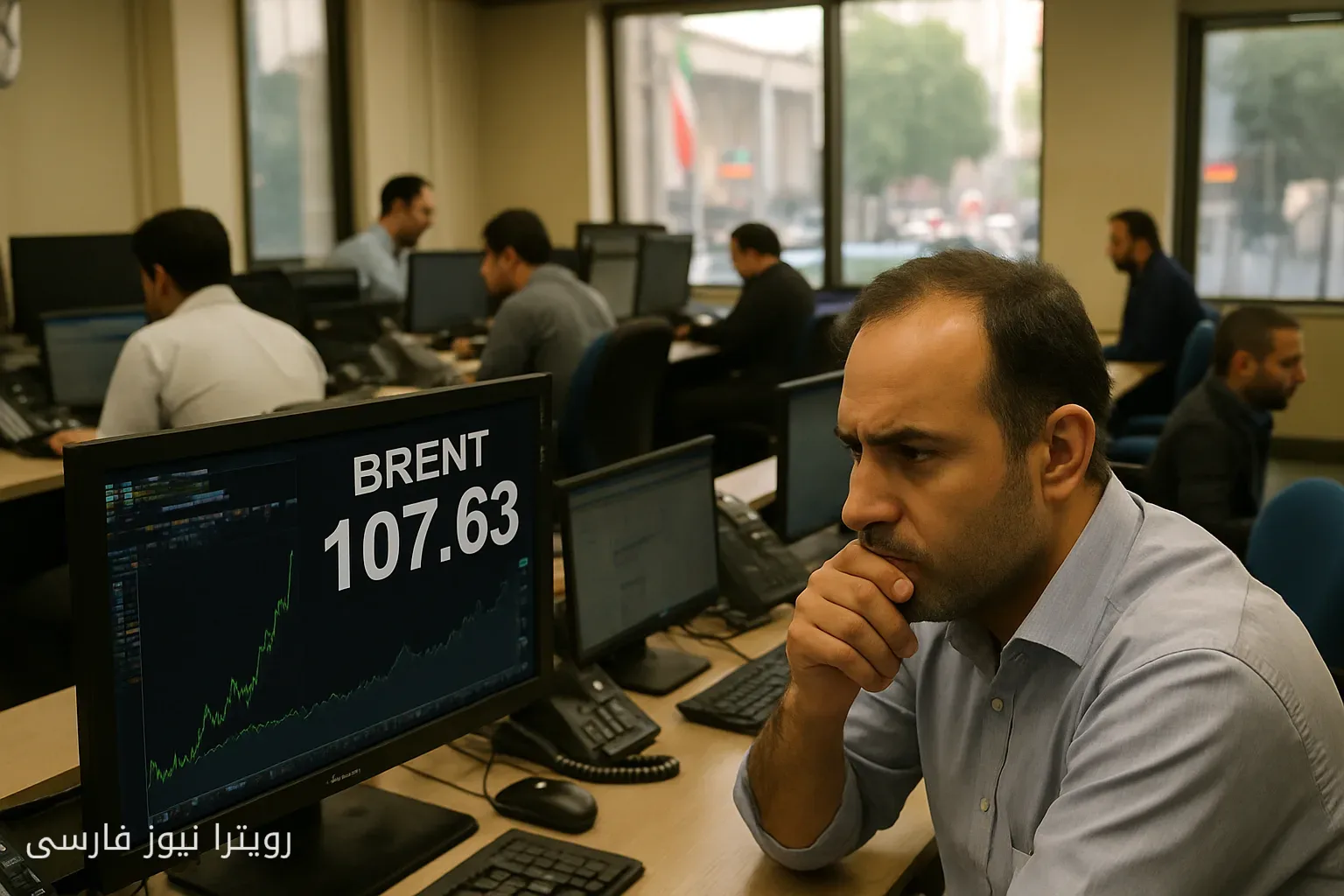
The oil market reacted swiftly. According to data from Thursday, September 10, Brent surpassed $108 for the first time since May and closed at $107.63; Wall Street reports linked the decline in indices to the 6.3% surge in Brent. On Friday morning, September 11, in Asia, Brent traded near $104.09 and retreated about 3.3%.
Reports based on Asian market data also recorded Brent's re-crossing of $109 at times during overnight trading and early Friday; momentary peaks of $109.97 to $110 were reported, attributing risk to disruptions in Middle Eastern shipping.
Alongside price fluctuations, Asian stock indices retreated in line with rising bond yields and expected inflation. In the early morning report of Friday, September 11, Japan's Nikkei fell by 1.9% and Korea's KOSPI by 1.8%, while Brent hovered around $104.
The physical market also showed signs of risk displacement. According to S&P Global data, the physical premium of 'Murban' over 'Dubai' reached $31.14 per barrel on September 9, which is considered an unprecedented jump of $10 compared to the previous week. This price divergence highlighted the physical prices in the Middle East against paper indices.
Iran's declared policy at sea also changed tone. On September 6, Tehran announced a plan to declare a new 'exclusion zone' outside of Hormuz; in this context, Iranian national security officials stated that precise coordinates would be communicated later, and the passage of vessels intending to transit the waterway would be subject to new rules.
On the other hand, the U.S. Department of Energy spoke on September 6 and 11 about the improvement in the passage of non-Iranian oil through Hormuz. Chris Wright, the Energy Secretary, stated in television interviews on September 6 that the 'seven-day average' passage through Hormuz is 'over 9 million barrels per day' and considering alternative routes (UAE and Saudi pipelines), the 'total output of the region' has reached 'about two-thirds or more of pre-war levels.'
Independent assessments have also recorded this trend with different figures. According to an Associated Press report on September 11, non-Iranian oil exports, which peaked at 300,000 barrels per day during the height of war disruptions, increased to 8.4 million barrels per day in September and, considering alternative routes, reached 10.8 million barrels per day. At the same time, a note from commodity analysts at ING, Warren Patterson and Eva Monti, confirmed the continuation of 'flows significantly lower than pre-war.'
The maritime risk level remained high in the days leading up to September 10 and 11 in the Hormuz axis. CENTCOM announced on September 5 that three Iranian tankers were destroyed or incapacitated after 'being targeted by U.S. warships with ballistic missiles.' The statement noted that two tankers 'were permanently incapacitated' and the third empty tanker 'was destroyed.' This command warned that if necessary, it would destroy the 'limited and vulnerable fleet of Iranian tankers.'
There is documented evidence of the use of American autonomous vessels in this waterway. On August 30 and September 1, 2022, the U.S. Navy reported two instances of Iranian attempts to tow and seize the 'Saildrone Explorer' in international waters of the Persian Gulf and the Red Sea, and by dispatching the patrol vessel USS Thunderbolt and MH-60S helicopter from Bahrain, the recovery of the equipment was recorded. These records demonstrate the pattern of conflict surrounding unmanned platforms in this area.
At the product and fuel level, the effects also spilled over to the U.S. domestic market. On Friday, September 11, it was reported that the average price of diesel in the U.S. surpassed $6 per gallon; simultaneously, Wall Street recorded its fourth consecutive decline as Brent returned above $100.
In summary of prices for the window of September 10 to 11: Brent peaked above $108 on September 10 and settled at $107.63; early on September 11 in Asia, the range of $104 to $110 was repeated in reports, and the figure '$104.09' appeared in the early hours of the day in news agencies. This fluctuation aligned with the retreat of Asian indices and the increase in the physical premium in the Middle East.
In terms of transit flow, two sets of numbers provide a clear picture: 1) the official U.S. narrative of 'over 9 million barrels per day' passing through Hormuz and a total of 'about 13 to 14 million barrels per day' with alternative routes; 2) media estimates of the increase in 'non-Iranian' exports from 300,000 to 8.4 million barrels and 10.8 million barrels with routes outside Hormuz. In both scenarios, the common statement from analysts is that the transit level 'remains below pre-war.'
In the context of field developments, Tehran spoke on September 6 about formulating new 'prohibited zones' and announced the targeting of 'Saildrone 5838' on September 10; during the same period, Washington targeted three Iranian tankers on September 5. Following these events, markets touched a new peak on September 10 since May and entered a price correction on September 11.
No technical details regarding the strike or definitive incapacitation of the American unmanned vessel have been released; the only definitive announcements are the 'targeting' by the IRGC and the 'denial of the strike' by the U.S. on September 10 and 6. In such a situation, the sensitive variable for short-term pricing is the possibility of changes in the transit level through Hormuz and operational risks against unmanned platforms and commercial vessels; the same variable reflected in the statements of ING analysts on Friday regarding 'significantly lower than pre-war.'
At the policy level, the presence of U.S. Navy escorts for the passage of tankers has been described as 'essential' and continues unabated; U.S. energy officials have introduced the continuation of these escorts as necessary to maintain the current flow. On the other hand, CENTCOM announced that it would take further action to destroy the fleet of Iranian tankers if necessary. These signals keep the risk of disruption in the energy supply chain from the Persian Gulf to European and Asian markets high in the coming days.
In the basket of price signals, in addition to physical premiums, the update from the U.S. Energy Information Administration on September 9 is also noteworthy: this agency raised the average Brent price for 2026 from $87 to $91 and reported a rapid decline in global reserves following reduced Middle Eastern exports.
Ultimately, the network of tensions in the Strait of Hormuz is monitored through three numerical axes: 1) the daily transit level through Hormuz itself; 2) the capacity of pipelines circumventing Hormuz; 3) the level of threat against unmanned platforms and tankers. The configuration from September 10 to 11 shows that any news from the third axis immediately casts a shadow on the first and second axes and is reflected in the Brent price curve.
Key Figures
- September 10, 2026: Brent peaked above $108 and settled at $107.63.
- September 11, 2026 (Asia, early morning): Brent traded around $104.09 and was about 3.3% lower.
- Type and ID of target: Saildrone Explorer, hull number 5838.
- CENTCOM's official statement: 'completely false' regarding the occurrence of the strike.
- Non-Iranian transit flow: growth from 0.3 to 8.4 million barrels/day; with alternative routes 10.8 million barrels/day.
- Reported average transit by the U.S.: 'over 9 million barrels/day' from Hormuz; 'about two-thirds or more' with pipelines.
- Physical premium of Murban over Dubai: $31.14/barrel on September 9.
- Action on September 5: destruction/incapacitation of 3 Iranian tankers according to U.S. announcement.
- Records from 2022: two Iranian attempts to seize Saildrone thwarted by the U.S. Navy.