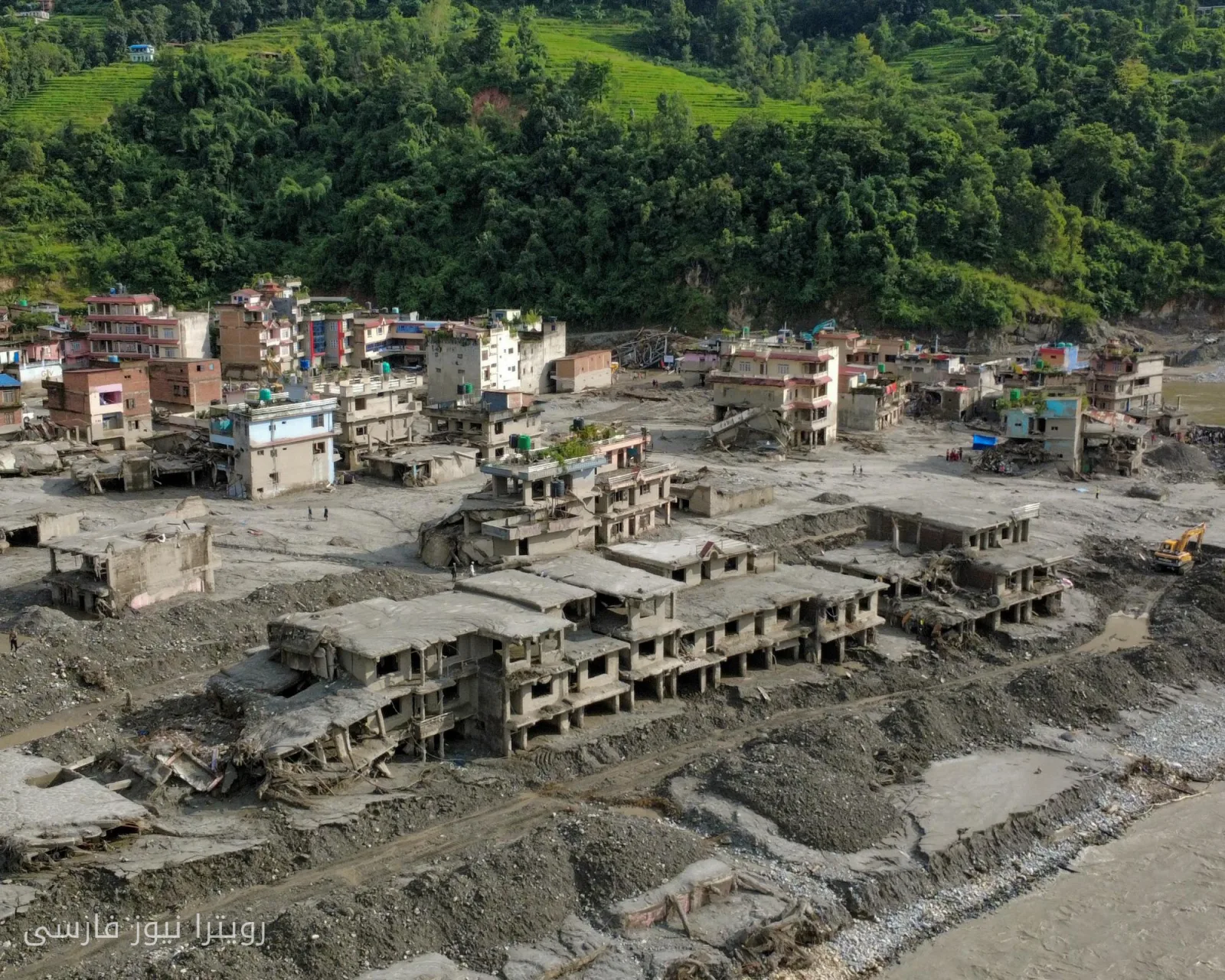
New scientific research indicates that climate change has likely weakened the glacier that caused catastrophic and deadly floods in Nepal and Tibet last month due to its collapse. These floods resulted in the deaths of over 1300 people and the disappearance of more than 5000 others.
Details of the Incident
Research shows that unusually warm conditions prior to the glacier's collapse contributed to this disaster. According to researchers, the glacier suddenly released 110 million cubic meters of snow and ice into the valley below, resulting in flash floods of almost unprecedented scale. These floods struck downstream communities without warning.
Read more: The Controversy of Pigeon Droppings in the City Streets
Consequences of Climate Change
Dr. Friedrich Otto, a climate science professor at Imperial College London, pointed out that communities in Nepal are paying a heavy price for the crisis caused by greenhouse gas emissions occurring thousands of miles away. He emphasized that no local action can fully protect vulnerable people from this level of destruction.
On August 26, a large section of the glacier and rock, covering nearly 200,000 square meters, collapsed from Mount Langtang Lirung. The incident struck the ground with such force that it was recorded as an earthquake. The resulting flood included water, ice, rocks, and debris that swept away families, homes, and infrastructure.
Nepal's Request for International Aid
Nepal has made an official request for financial assistance from the United Nations Climate Damage and Loss Fund. Nepal's Foreign Minister, Shisir Khanal, has called on major greenhouse gas-emitting countries like China and India to accept joint responsibility for this disaster. Madhav Apte, senior technical advisor at the Red Cross Climate Center, also emphasized that only drastic reductions in greenhouse gas emissions can help mitigate the damages and losses caused by this disaster.
Researchers also noted that climate change in the region has led to an increase in temperature of about 2 degrees Celsius since pre-industrial times, with a specific increase of about 1.5 degrees Celsius in July and August. They stated that glaciers are significantly retreating, which is contributing to the destabilization of mountain slopes and increasing risks associated with collapses.
Read more: The Absence of Atlantic Storms at the Start of the Storm Season · The Tragic Death of a Young Girl at the Hands of Her Mother and Her Suicide