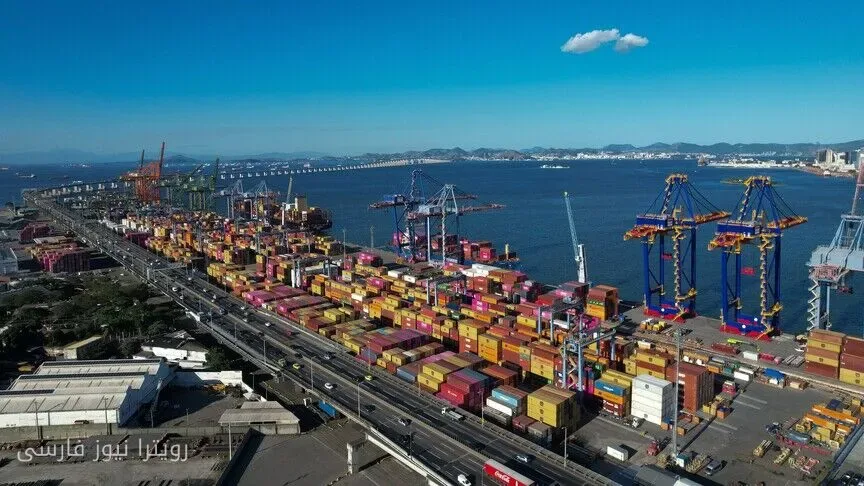
The World Trade Organization (WTO) warned in a report published on Tuesday about the risks of the geographical fragmentation of the global trade system. The organization stated that if global trade is divided into aligned blocs, global GDP may decrease by up to 5.1 percent, and global exports could drop by up to 18.6 percent.
Different Scenarios and Their Impacts
In a worst-case scenario, if multilateral cooperation is completely halted and the WTO is replaced by a non-structured network of bilateral trade agreements, it is predicted that global GDP could decrease by up to 6.9 percent and global exports could decline by up to 26.9 percent. This scenario represents serious challenges for the global economy.
Growth Potential in Multilateral Cooperation
Conversely, strengthening multilateral trade cooperation could increase global output by up to 2.9 percent and expand global exports by up to 17.9 percent. The report highlighted the positive impacts of integration into the multilateral trade system, noting that since 1995, trade among members of this system has increased by 140 percent. Additionally, this trend has contributed to faster economic growth in low- and middle-income countries.
However, the benefits of this growth have been distributed unevenly. Less developed countries account for just under 1 percent of global trade, and trade costs in their manufacturing and services sectors are 50 percent higher than in high-income countries.
Future Outlook and the Role of Artificial Intelligence
Looking ahead, the report predicts that artificial intelligence could increase global trade by up to 40 percent by 2040 and add more than 13 percent to global GDP over the next 15 years. This increase will be particularly noticeable in the field of deliverable digital services.
The World Trade Organization also pointed out current challenges. The head of the organization, Ngozi Okonjo-Iweala, emphasized that global trade is facing its toughest period in the past 80 years, and non-discriminatory rules are under increasing pressure. She noted the decline in the share of global trade that is subject to “most-favored-nation” conditions, which has decreased from about 80 percent in 2022 to 72 percent currently.
In conclusion, the report emphasizes that while current challenges are significant, with appropriate approaches and strengthened international cooperation, sustainable and balanced growth in global trade can be achieved.